
Staff Member #1
Biography of instructor/staff member #1

Infracademy
Discover how under-sleeper pads improve geometry retention, reduce ballast degradation, and extend maintenance cycles across modern rail networks.
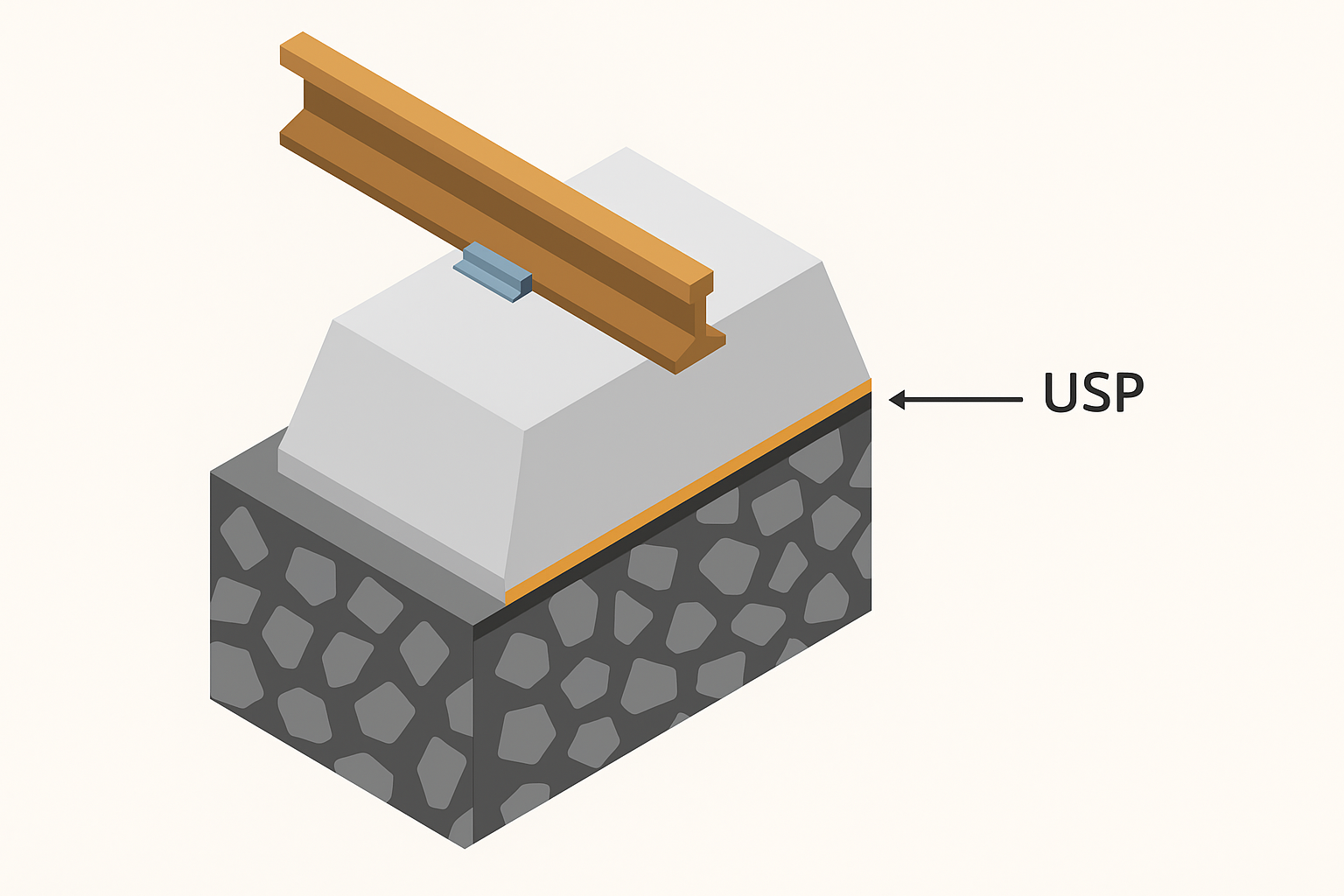
Under-sleeper pads (USPs) are a powerful and increasingly adopted solution for improving ballast stability, reducing track degradation, and extending maintenance intervals across high-speed, heavy-haul, conventional, metro, and tramway systems. This course provides a clear and practical understanding of how USPs function, how stiffness classes and material properties influence performance, and how they interact with ballast, sleepers, and track geometry. Learners explore key engineering considerations such as load distribution, settlement reduction, vibration behaviour, ballast attrition, tamping impacts, and compatibility with different sleeper and fastening systems. The content is enriched with real-life good and bad practices drawn from international projects, delivered by experts deeply involved in USP technology from technical, operational, and commercial perspectives. The course is designed for track designers, civil engineers, project managers, QA/QC teams, maintenance specialists, procurement professionals, sales teams in the track materials and elastomer industries, and students from civil, mechanical, and transportation engineering faculties. By the end, participants will be able to evaluate USP suitability, compare technologies, assess supplier offerings, identify installation risks, and confidently integrate under-sleeper pads into performance-driven track designs.
Add information about the skills and knowledge students need to take this course.
Biography of instructor/staff member #1
Biography of instructor/staff member #2
The Open edX platform works best with current versions of Chrome, Edge, Firefox, or Safari.
See our list of supported browsers for the most up-to-date information.
Your answer would be displayed here.